What To Wear Snowboarding
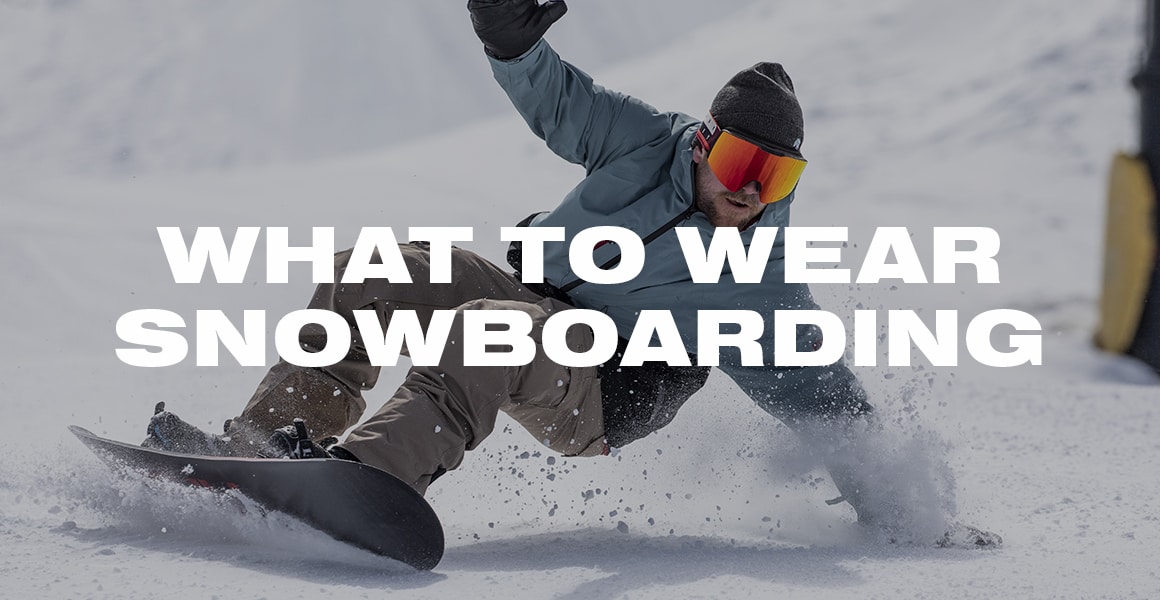
It doesn't matter if it's your first time snowboarding or your hundredth day of the season, having the right snowboard gear is critical for staying warm, dry, and comfortable in a variety of weather conditions while on the mountain. We have a huge selection of the best snowboard jackets, pants, goggles, gloves, and accessories to fit your style and budget needs. So get out that checklist and make sure you have all the snowboard clothing you need to enjoy winter to the fullest.
What to wear snowboarding:
SNOWBOARD JACKETS
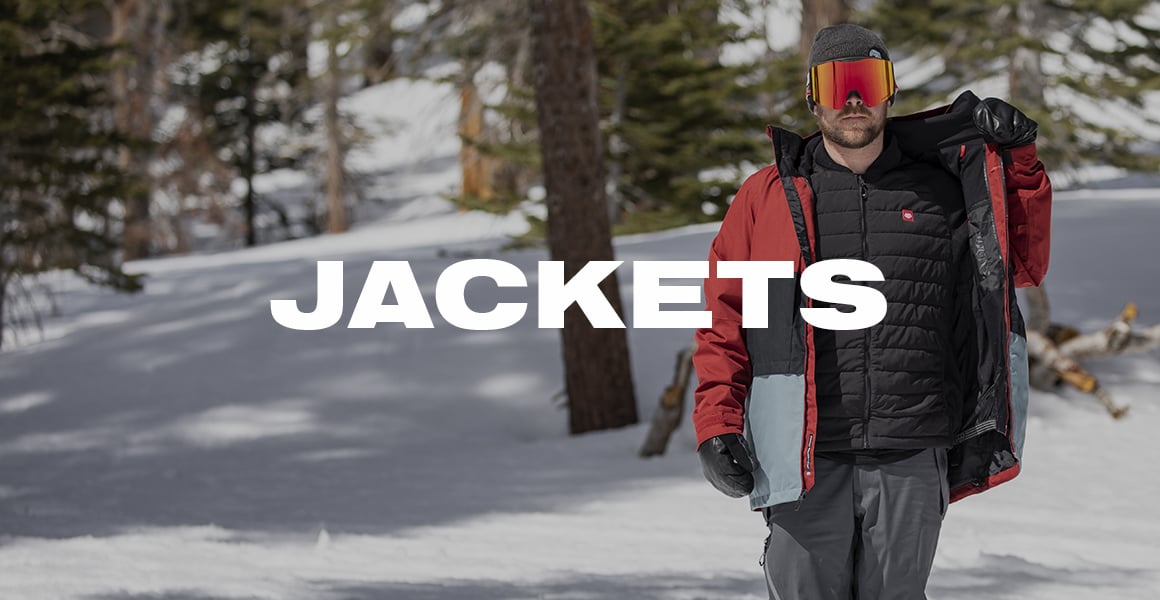


Shop All Men's Snowboard Jackets


Shop All Women's Snowboard Jackets
SNOWBOARD PANTS & BIBS
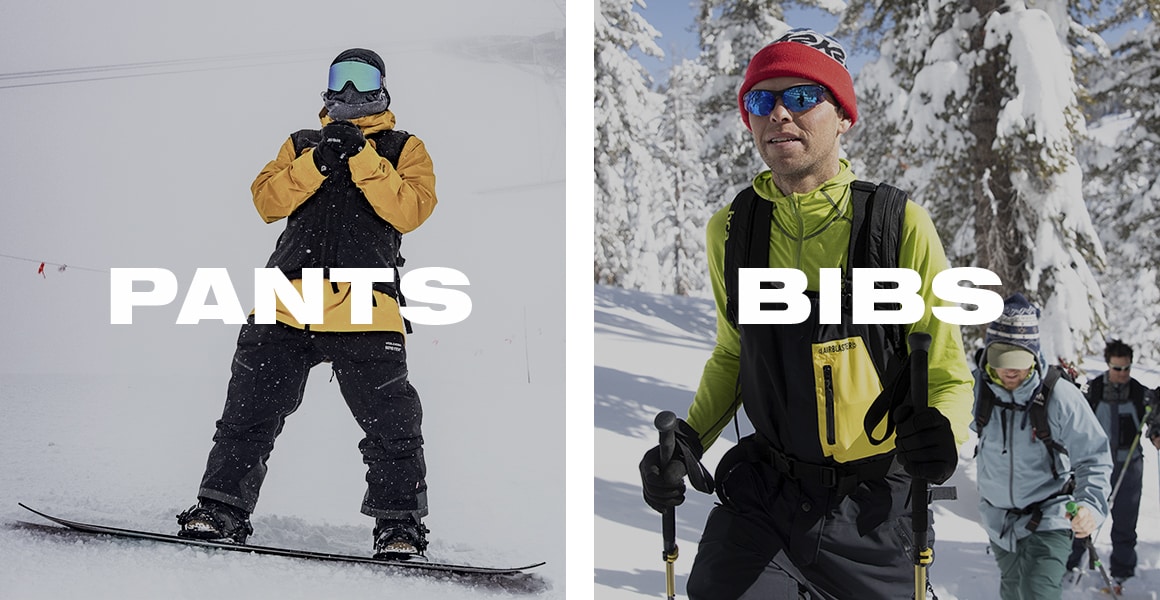
Snowboard pants are a vital outer layer that provides comfort and protection while out on the mountain. Whether your riding waist deep powder or slashing through the park on a spring day, pants are the one piece of snowboard outerwear you will use the most throughout the entire season. Made of the same materials as snowboard jackets, snow pants utilize waterproof materials and advanced construction to keep moisture out while retaining enhanced breathability. Available in two configurations, traditional pant style, and overall bib styles, each serves to keep you dry and warm while in the mountains. Comparable to jackets, the most important thing to note when choosing a pair of snowboard pants is the waterproofing and breathability rating which is provided by the manufacturer.


Shop All Men's Snowboard Pants & Bibs


Shop All Women's Snowboard Pants & Bibs
SNOWBOARD BASE LAYERS
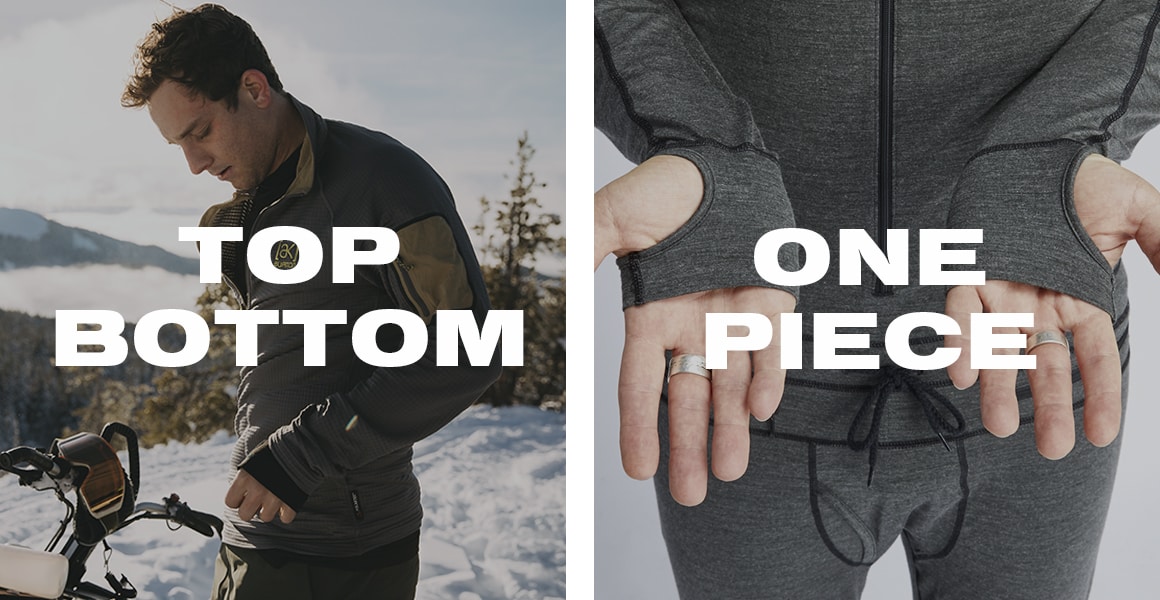
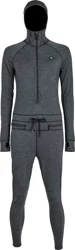
The key to comfort and warmth on the mountain is proper base layer/mid layer insulation. You can drop big bucks on the most expensive jacket and pant combo but if you fail to properly layer underneath chances are you will still be uncomfortable on cold days. Base layers come in two configurations: two-piece top and bottom styles and single one-piece designs. Each has its own pros and cons in terms of fit and functionality and comes in a variety of different materials that ensure maximum comfort, warmth and moisture-wicking properties.




SNOWBOARD SOCKS
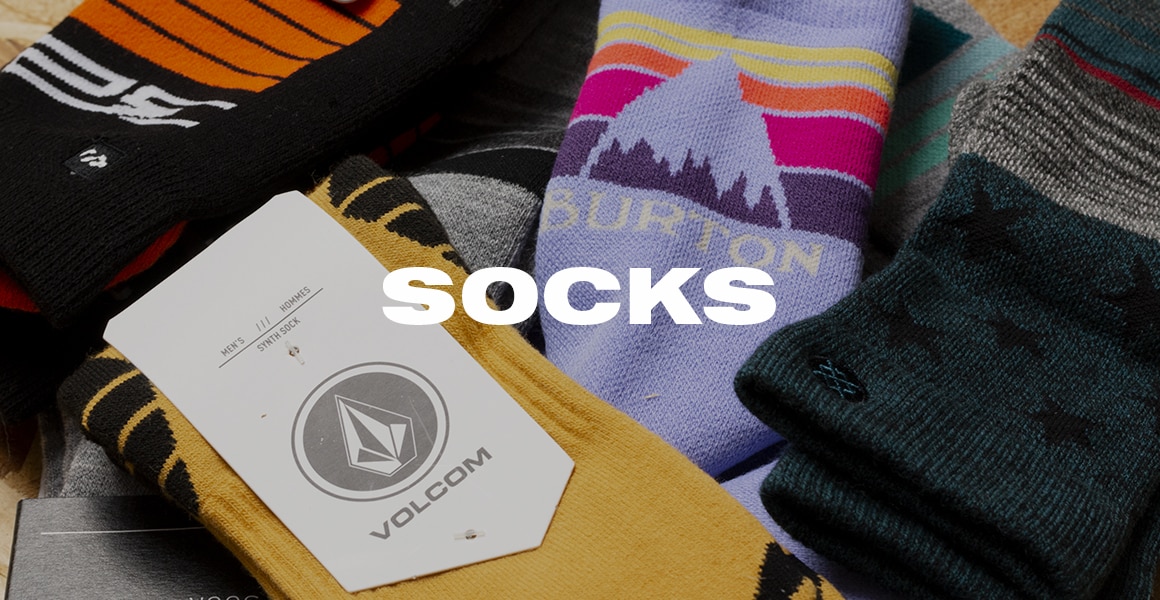
Snowboard specific socks were created to provide added warmth and comfort when out on the mountain. Wearing your everyday cotton socks inside your snowboard boots can lead to improper fitting boots, frozen feet, and general discomfort. Snowboard socks are designed specifically to work with your foot and ankles natural articulation to ensure less bunching of the sock and reduced risk for discomfort. These specially designed socks also offer increased moisture wicking properties for all-day comfort and typically feature materials like merino wool and nylon polyester blends for added warmth.


Shop All Men's Snowboard Socks



Shop All Women's Snowboard Socks
SNOWBOARD GLOVES &MITTENS
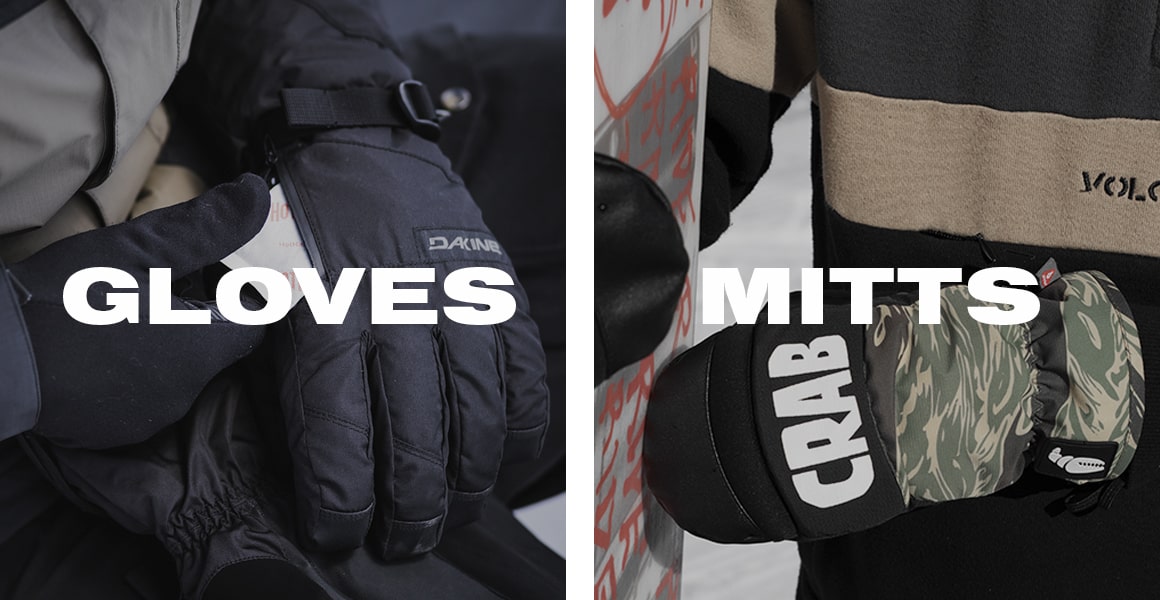
Wet and cold hands are the last thing you want to worry about when spending the day on the mountain. Snowboard gloves and snowboard mittens are designed to provide warmth and protection from the elements to keep your hands dry and comfortable. Traditional five finger gloves allow you full articulation and control over your all your fingers for increased grip and a more natural feel. Mittens provide increased warmth thanks to all your finger being located in a single shell. Both configurations are available in a variety of insulation levels and often feature shells that are made up of material like GORE-TEX®, Leather and Nylon.


SNOWBOARD GOGGLES
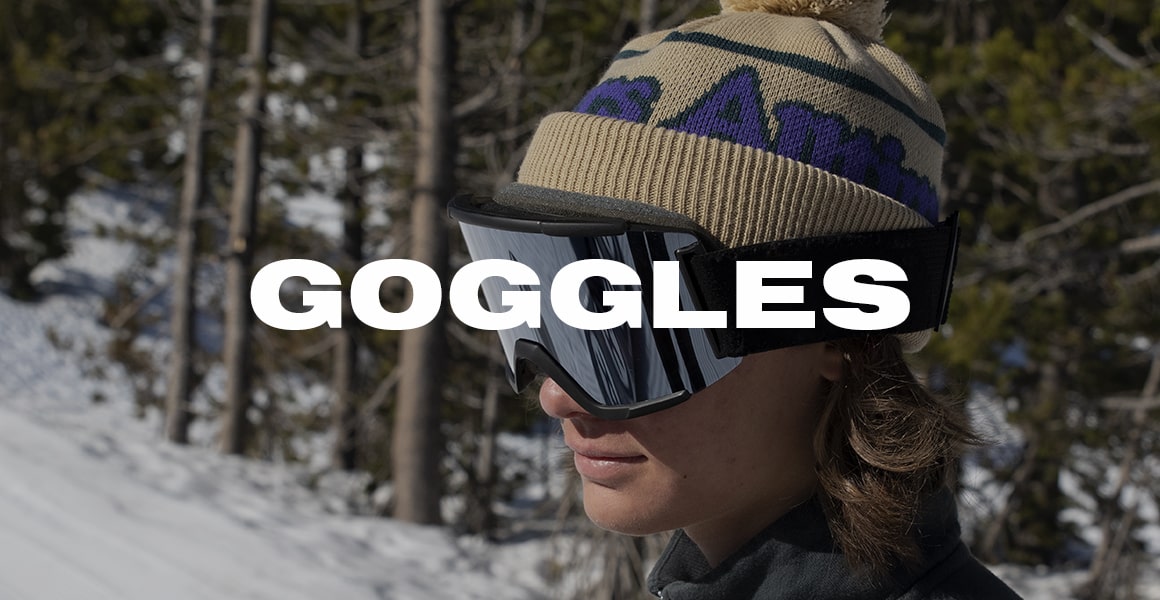
Snowboard goggles are a critical piece of snowboard equipment that provides comfort and safety on the mountain. If you can't see, you can't shred. All goggles provide fundamental protection from wind, snow and UV rays to keep your vision clear and line ahead of you visible. Goggles frames are available in a variety of different shapes and sizes but the most important thing you will want to pay attention to when selecting a pair of goggles is the lens tint and VLT rating. The color and tint of the lens should be directly influenced by the snow and lighting conditions you plan to ride it. Goggles with quick-change lens and frame configurations offer the easiest way to swap out different lenses on the fly.


SNOWBOARD FACEMASKS & BEANIES
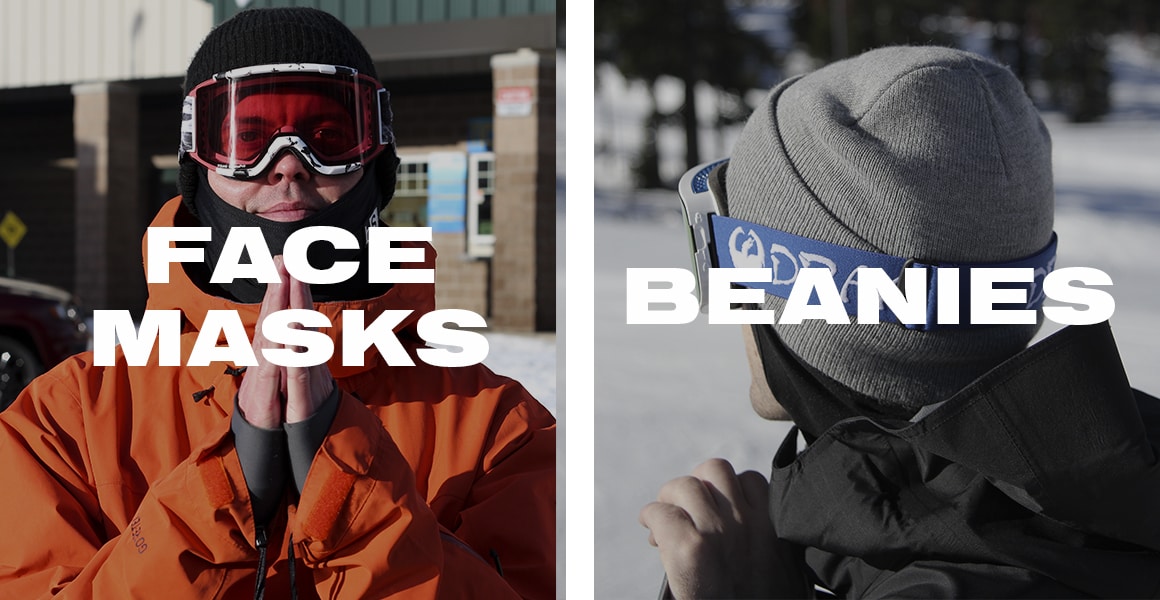
Beanies, facemasks, and balaclavas provide critical heat retention and protection which is a must for staying comfortable and warm on the mountain. Beanies come in a variety of different styles and materials and provide increased warmth thanks to their thicker design. Balaclavas and facemasks are a great choice if you prefer full protection for your entire head and face. Many styles also allow you to adjust how much coverage they provide by pulling them either up or down over your nose and mouth. Face masks and Balaclavas can be worn in conjunction with a beanie and are also a great choice if you wear a helmet, as the thin, contouring design will not interfere with your helmets overall fit.


Shop All Facemasks & Balaclavas


SNOWBOARD HELMETS & PROTECTION
Whether you're hitting the terrain park, or exploring the backcountry, a certified snowboard helmet with snow-specific features and technology is a critical piece of gear that is sure to keep you safe and confident in various snowboarding conditions.


Snowboarding Layers
Base Layer
First off, DON’T WEAR COTTON. Your base layer should keep you warm and dry underneath the rest of your garb. Sweating and exposure to moisture in the air can cause your skin to become cold, so a first layer of wicking fabric is critical. Moisture-wicking describes a material that transfers the water molecules from the surface of your skin to the outer clothing layers, keeping you dry. Capilene, Coolmax and Polartec are all examples of moisture-wicking fabrics that are commonly used in base layers. Cotton, on the other hand, is a hydrophilic material (it easily absorbs water) and shouldn’t be worn as an inner layer.
Be sure to use both a top and bottom base layer, and wear socks that are made for snowboarding and use similar wicking materials. Did we mention, don’t wear cotton!
Shop Snowboard Base Layer
Insulating Layer
Wool, down and fleece are the most common mid layers due to their insulating properties. Their job is to keep you warm and can fit more loosely than your base layer. Because you are wearing a moisture-wicking first layer, the insulating layer will receive a lot of the transferred dampness; so again, no cotton.
Hoodies are great off the slopes, but if they have any cotton content, don’t wear them riding. Unfortunately, hoodies generally wind up as wet, cold rags on the mountain… not too swell.
Sometimes, you’ll find that a jacket or pant that is designed as an outer layer actually has some padding to it. It can be built-in or removable, but unless it’s an insulating material such as those listed above, you’ll need to supplement the shell with a fleece or wool mid layer to stay warm.
Shop Fleece Jackets


Snowboard Outerwear Terms
Up until this point, most of the discussion has been about the shell, or outer layer, of your gear. That layer should be the only part of your snowboarding uniform that will see direct contact with the elements, so properties such as water-resistance and breathability are the top concern. However, warmth is also a super important aspect of outdoor apparel, and insulating layers attached to an outer shell will significantly aid in keeping you toasty in cruddy conditions.
- ARTICULATED ELBOWS/KNEES
- These are angles built into a jacket or pant around your elbow or knee joints, allowing for unencumbered range of motion.
- CUFFS
- A cuff is the part of a jacket or pant that wraps around your wrist or ankle. There are usually mechanisms in outerwear cuffs designed to prevent snow or rain from entering your sleeve or pant leg, such as cinches or Velcro closures.
- DURABLE WATER REPELLANT (DWR) COATING
- DWR is a coating applied as either a primary or supplementary water-resistant shield. Not only does it increase the waterproofness of a garment, but it does so without much or any sacrifice in breathability.
- GAITERS
- On snowboarding clothes, gaiters made from a water-resistant material (such as polyester) extend outward from the inside of the sleeve or pant leg, providing a protective interface at your wrists and ankles. Their purpose is to cover any exposed skin between your cuffs and your gloves or boots thereby restricting any snow, cold or wind from making its way into the inner parts of your garment.
- HOODS (Jackets)
- There are several features built into jacket hoods to make them more convenient, protective and customizable. For instance, hoods are either fixed/attached or removable. They can be adjustable through cinching cords or Velcro straps, or they might be designed to roll up-and-into a lateral pocket on the back of your collar. No matter what the hood can do, make sure that it reaches your forehead and that there is some protection at the chin (such as a "chin guard") to cover the zipper when it is pulled all the way up.
- PASS POCKETS/D-RINGS
- Many resorts have begun to use electronic pass scanners to shuttle riders through the lift-lines quickly and efficiently. To use a scanner, you often need to get really up close and personal with the sensor in order for it to read the chip in your pass. Rather than stick your pass in a pant pocket or chest pocket (just imagine the scene when you encounter a really picky scanner), you can keep it safe and secure in a jacket pass pocket. Often see-through, these pockets are positioned in convenient locations on the jacket to allow for easy scanning, often at the bottom of your sleeve, protected by a large cuff straps.
- D-rings serve a similar purpose, giving riders a convenient place on their jacket to attach a lift ticket.
- POWDER SKIRTS
- A powder skirt works somewhat like a gaiter for the waist, giving riders an extra layer of protection from the snow. By preventing snow from entering through the bottom of the jacket and at the same time protecting the top of the pants, powder skirts allow you to remain warm and dry in your gear, despite severe weather.
- REINFORCED SEAT/KNEES (Pants)
- The makers of a good pair of riding pants will recognize the need for reinforcement around the seat and knees, where most contact with the snow happens. Therefore, some pants come with added patches, stronger materials or thicker fiber weaves in these areas to combat their accelerated wear and tear.
- SEAMS
- As described in the "Waterproof" section of this article, seam sealing is an important step in ensuring your gear's protective quality. Waterproof tape seals the seams to prevent any moisture from leaking in through the needle holes made when stitching the material together. Critically taped seams will cover the most exposed sections of the seams, while fully taped seams will seal every stitch on the garment.
- STORM FLAPS
- A storm flap is the piece of material that keeps the snow, rain or wind from breaking through the tiny spaces in the zippers (or other openings) on your snowboarding clothes. The flap is most commonly on the outside of the zipper, but can also be found along the inside or on both sides, essentially acting as an added shield against the elements.
- UTILITY POCKETS
- It's kind of crazy to think about how much junk we carry around with us while riding - there's the cell phone, wallet, keys, iPod, chapstick, sunscreen, goggles, snow tool, extra gloves, spare beanie… get the picture? Luckily, outerwear companies recognize the insane pocket-need of the modern rider, and have been making jackets and pants with more stash spots than ever before. Some pockets are designed for general use, while others, like goggle pockets or so-called "media-pockets," are intended for a particular item.
- Quick tip: While having a place for everything can be really great, you could benefit from being discerning about what you take to the mountain. In an industry where lightweight gear is the objective, you may end up counteracting the purpose of your clothes by weighing them down with unnecessary stuff.
- VENTS
- Ventilation is an essential part of any outerwear. Despite a garment's breathability rating, there are still times when a little added airflow makes a huge difference in your comfort while riding. Many jackets will come with vents in the underarm area (called "pit zips"), on the chest, and/or across the back to keep your torso cool. In pants, vents are commonly found along the seams, at the hips and across the thighs. Vents are often lined with mesh, so while the air will flow, less chill will enter your jacket/pant through the opening.
- ZIPPERS
- Zippers for outerwear are made to varying specifications of strength and water-resistance. These aren't ordinary zippers; they are robust, hefty, technical closures that are designed to secure your garment and protect you from cold and wet conditions. There are waterproof zippers for high-end gear, and there are zippers sprayed with water-repellant coatings to discourage moisture from entering through the teeth.Quick tip: When buying a jacket/pant, check out the zipper pull: is it large and grippy enough to grab with your gloves on? Being able to easily access the interior of your clothes (or the pockets for that matter) without removing your gloves is an often-overlooked aspect of outerwear convenience, but it's one that will add riding time to your day.
Keep Learning
Still Have Questions?
We’re here to help. You can call, email, chat or IM during business hours seven days a week. Our customer service staff skates…a lot. They know their stuff and are happy to help you with all things skate.